Bihar RJD Legislator Faces Legal Action After Heated Phone Exchange With Government Official

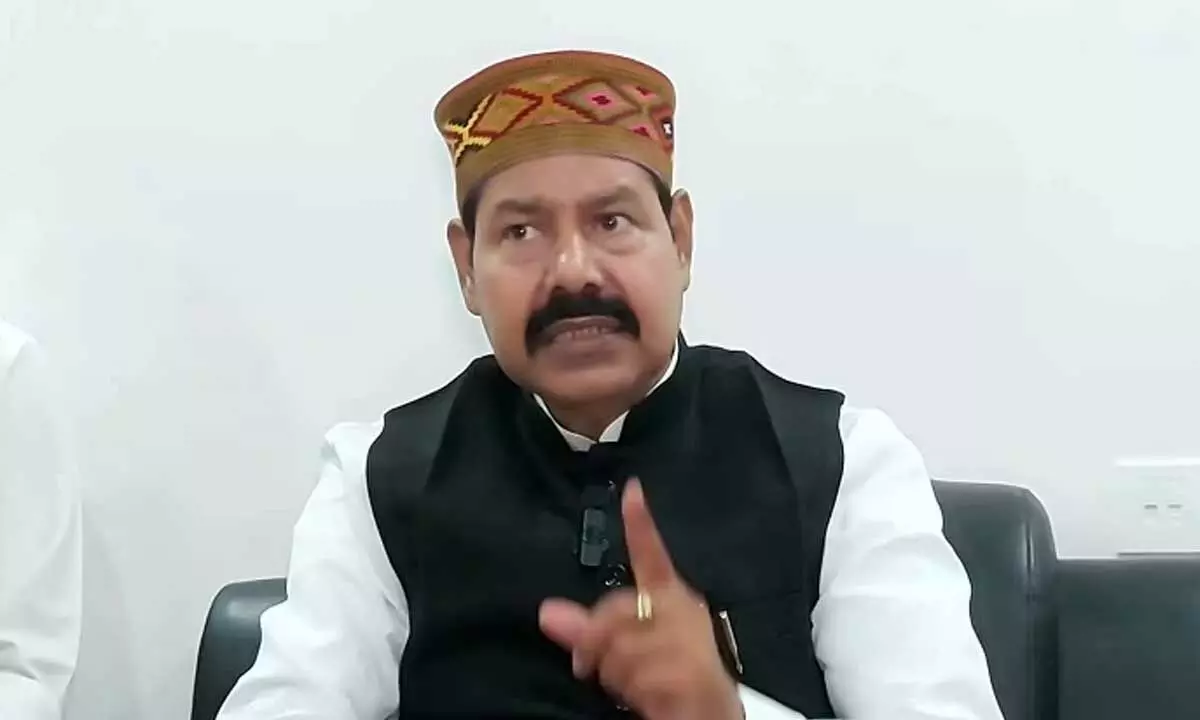
RJD MLA Bhai Virendra allegedly threatens panchayat secretary with violence in viral audio clip over death certificate inquiry, prompting FIR filing at SC/ST police station.
A heated telephone conversation between a Rashtriya Janata Dal legislator and a local government official has erupted into a public controversy, drawing comparisons to popular web series portrayals of rural administrative conflicts while highlighting real tensions between elected representatives and bureaucratic staff in Bihar.
The incident centers around an audio recording that has gained widespread circulation on social media platforms, allegedly capturing a confrontational exchange between Bhai Virendra, an RJD Member of Legislative Assembly representing the Maner constituency, and a panchayat secretary during what should have been a routine administrative inquiry.
The controversy began when the legislator reportedly contacted the local panchayat secretary to inquire about the processing status of a death certificate for an individual named Rinki Devi. However, the routine administrative call quickly escalated into a heated argument when the government official failed to immediately recognize the caller's identity or political position.
According to the viral audio clip, the legislator expressed outrage at not being recognized, declaring that his name and reputation were known throughout the country. The recording captures what appears to be an expectation of immediate recognition and deference based on political status, reflecting broader tensions between elected officials and administrative staff in rural governance structures.
The panchayat secretary, however, maintained a composed demeanor throughout the exchange, responding that respectful communication would be reciprocated with courtesy, while disrespectful behavior would be met with an equally firm response. The official clearly stated his lack of fear regarding potential consequences, demonstrating a notable resistance to intimidation tactics often employed in such hierarchical conflicts.
The situation deteriorated further when the legislator allegedly issued direct threats of physical violence, specifically mentioning striking the official with footwear while challenging him to file legal complaints if he chose to do so. This escalation moved the conflict beyond verbal disagreement into territory involving explicit threats of assault, transforming a routine administrative matter into a potentially criminal incident.
Throughout the heated exchange, the government official consistently attempted to redirect the conversation toward the actual administrative work at hand, informing the caller that the requested death certificate was already being processed and urging focus on official business rather than personal grievances or intimidation attempts.
The legislator's response included questioning the official's right to hold his position without recognizing local political representatives, suggesting that consequences beyond simple job transfers might follow. This approach reflects a concerning attitude toward administrative independence and the proper functioning of government services regardless of political pressures.
Following the incident, Sandeep Kumar, the panchayat secretary involved in the confrontation, has filed a First Information Report against Bhai Virendra at a police station designated for cases involving Scheduled Castes and Scheduled Tribes, indicating that the matter has moved into formal legal proceedings.
The incident has drawn widespread attention partly due to its striking resemblance to fictional portrayals of similar conflicts in popular entertainment, particularly the Amazon Prime series "Panchayat," which depicts ongoing tensions between elected representatives and administrative officials in rural Indian settings. The real-life controversy mirrors the show's exploration of ego, power dynamics, and protocol conflicts within local governance structures.
While India Today has not been able to independently verify the authenticity of the viral audio recording, the voice in the clip bears resemblance to that of the accused legislator. The RJD MLA has not yet issued any public response to address the allegations or the widespread circulation of the controversial recording.
The incident highlights broader issues within India's rural governance system, where elected representatives and administrative staff often operate within complex hierarchical relationships that can lead to conflicts over authority, respect, and proper procedures. Such tensions frequently arise when political figures expect immediate recognition and deference from government employees who are technically bound by administrative protocols rather than political loyalties.
The controversy also raises questions about appropriate conduct for elected officials when interacting with government staff, particularly regarding expectations of recognition and the use of intimidation or threats to achieve administrative objectives. The incident serves as a case study in the challenges facing democratic governance at the grassroots level, where personal relationships, political hierarchies, and administrative procedures often intersect in complex ways.
The formal legal action taken by the government official represents a significant response to what are alleged to be threats and intimidation, suggesting that administrative staff are increasingly willing to challenge inappropriate behavior from political figures through proper legal channels rather than accepting such treatment as inevitable aspects of their professional duties.
This development occurs within the broader context of ongoing efforts to strengthen democratic institutions and ensure that government services operate according to established procedures rather than political influence or intimidation. The outcome of the legal proceedings may set important precedents for how similar conflicts are handled in the future, particularly regarding the boundaries of acceptable behavior for elected representatives in their interactions with administrative staff.
As the controversy continues to generate public discussion and media attention, it serves as a reminder of the ongoing challenges in maintaining professional standards and mutual respect within India's complex system of democratic governance, particularly at the local level where personal relationships and political power dynamics often intersect with administrative responsibilities and public service delivery.