Monsoon mayhem: Torrential rain brings Delhi-NCR to a standstill

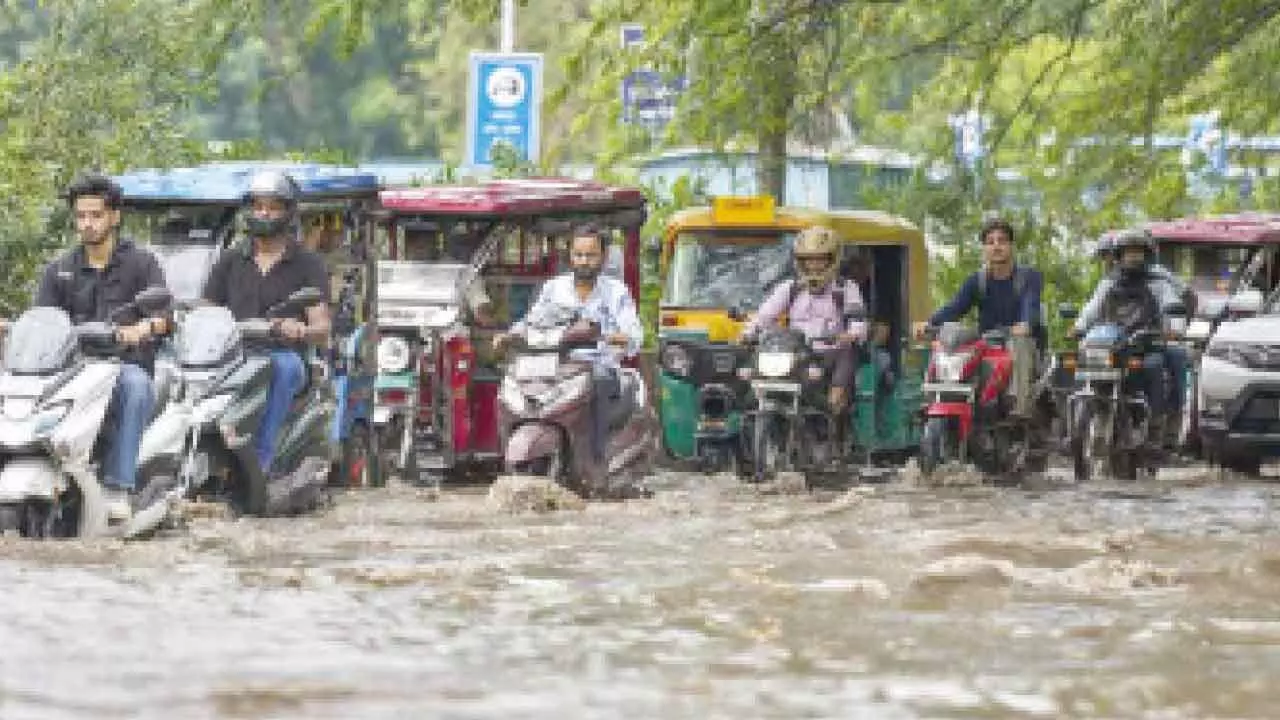
Areas like ITO, Connaught Place, Minto Bridge, Ring Road, and South Extension witnessed significant water accumulation, with some parts reporting knee length water levels
New Delhi
A relentless spell of monsoon rain plunged Delhi and the National Capital Region into disarray on Wednesday, flooding roads, crippling traffic, and once again exposing the city’s inadequate drainage systems. Streets turned into streams, vehicles broke down mid-route, and frustrated commuters were left battling waterlogged intersections and hours-long gridlocks.
The rain began in the early morning hours and continued well into the day, soaking markets, underpasses, and key roads across the city. Areas like ITO, Connaught Place, Minto Bridge, Ring Road, and South Extension witnessed significant water accumulation, with some parts reporting water levels as high as the knees.
Data from the India Meteorological Department showed stark variations in rainfall intensity across Delhi. While Safdarjung, the city’s primary observatory — reported 8.8 mm of rainfall between 8:30 AM and 5:30 PM, other localities were hit harder. The Ridge area in North Delhi recorded 22.4 mm, Rajghat saw 22.2 mm, and Lodhi Road received 14.2 mm. Meanwhile, Pusa reported 13.5 mm, Najafgarh 11 mm, Aya Nagar 1.5 mm, and Palam just 0.5 mm. Although the figures may not seem extreme, the resulting impact was far worse, reflecting a chronic failure in drainage and flood management infrastructure.
The IMD had issued a yellow alert ahead of the showers, forecasting heavy to very heavy rainfall and the prediction proved accurate. Despite the alert, large portions of the city appeared unprepared for the deluge, reigniting criticism of civic agencies and their monsoon readiness claims.
Social media was quickly flooded with photos and videos of submerged streets, stranded vehicles, and commuters slogging through waterlogged roads. “Every monsoon we are told the city is prepared. Every time, it’s a lie,” posted one user, tagging city officials. Others shared clips of market areas and colonies under water, demanding accountability for repeated civic failures.
The chaos wasn’t limited to Delhi. In Gurugram, Sector 29, Sector 56, and the Golf Course Road area experienced extensive waterlogging, forcing some companies to announce work-from-home arrangements. NH-48 saw massive tailbacks, with traffic nearly halted in several places. In Noida, similar disruptions were reported along the Noida-Greater Noida Expressway and internal roads, causing hours of delays.
Public transportation also took a hit. Delhi Transport Corporation buses were either delayed or diverted due to impassable roads, and while metro services continued running, stations were overcrowded as more people avoided road travel. Reaching the metro itself proved difficult in waterlogged neighborhoods.
Iconic flood-prone locations, such as Minto Bridge, once again faced heavy waterlogging. A car was seen stuck beneath the underpass, prompting emergency teams to arrive with pumps to clear the water. Traffic Police issued advisories warning commuters to steer clear of flooded zones, recommending alternate routes across the city.
Experts say the city’s drainage system has not kept pace with rapid urbanization. Choked stormwater drains, illegal encroachments over natural channels, and delayed maintenance have all compounded the flooding problem. Despite repeated warnings and seasonal planning, the ground reality remains unchanged.
Municipal authorities said emergency response teams were deployed across the city, and pumping operations were underway in several trouble spots. Cleanup and drainage efforts are expected to continue through the week. Looking ahead, the weather department has predicted more rain over the next couple of days. Residents have been advised to stay indoors during heavy spells, avoid flooded zones, and follow official traffic and weather advisories.