National Herald Case: Delhi Court Declines To Take Cognisance Of ED Chargesheet Against Sonia, Rahul Gandhi

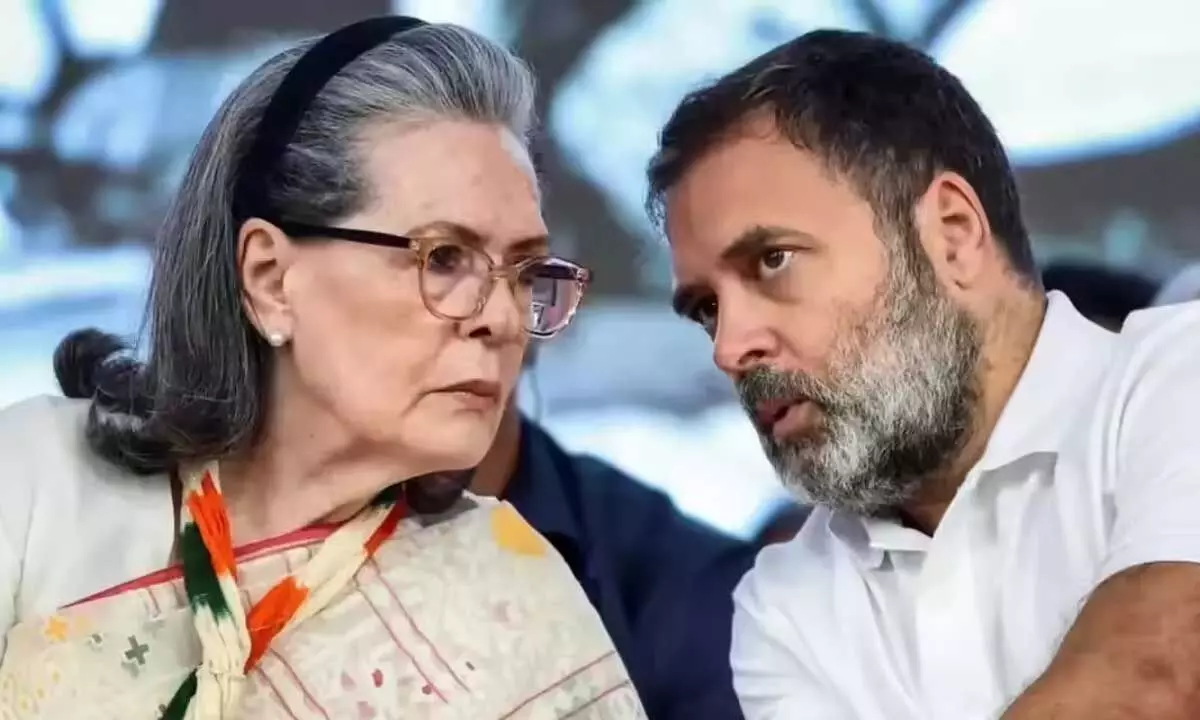
A Delhi court refused to take cognisance of the ED’s chargesheet in the National Herald case against Sonia and Rahul Gandhi, citing the absence of a predicate FIR under PMLA.
A Delhi court on Tuesday refused to take cognisance of the Enforcement Directorate’s chargesheet in the National Herald case that names senior Congress leaders Sonia Gandhi and Rahul Gandhi. The court held that it would be legally impermissible to proceed against the accused at this stage.
Special Judge Vishal Gogne of the Rouse Avenue Court observed that the prosecution complaint under the Prevention of Money Laundering Act (PMLA) was based on a complaint filed by a private individual and not on a predicate offence registered through a first information report. As a result, the court said it could not take judicial notice of the chargesheet or summon the Gandhis.
The court further noted that since the Delhi Police’s Economic Offences Wing had already registered an FIR in the matter, it would be premature to examine the contents of the ED’s chargesheet at this stage. It clarified that arguments presented so far had not gone into the merits of the case. However, the court allowed the ED the liberty to advance further submissions on the next date of hearing.
In a separate order, the court declined to provide copies of the EOW FIR to the accused, stating that they were not entitled to them, while allowing access to relevant case-related information.
The ED, represented by Additional Solicitor General SV Raju along with special counsel Zoheb Hossain, has alleged that Sonia and Rahul Gandhi used Young Indian Private Limited to take control of Associated Journals Limited, the company that published the National Herald newspaper, in a covert manner. According to the agency, assets worth over ₹2,000 crore were acquired through a loan of ₹50 lakh, and proceeds of crime amounting to nearly ₹988 crore were generated. The ED has also claimed that Young Indian, though registered as a charitable entity, was involved in money laundering and that the intended charitable objectives were never fulfilled.
Opposing these claims, counsel for Sonia Gandhi and Rahul Gandhi argued that Young Indian was formed to revive a debt-ridden Associated Journals Limited and preserve the legacy of the party-run newspaper. They maintained that no assets were transferred to the Gandhis personally and that mere shareholding does not constitute money laundering.
Apart from Sonia and Rahul Gandhi, the ED has also named Congress leader Sam Pitroda, former journalist Suman Dubey, Young Indian Private Limited and Kolkata-based Dotex Merchandise in the chargesheet, alleging a larger conspiracy involving shell companies and financial transactions.
Next Story