ASHA Workers Cry for Justice: Overworked, Underpaid, and Overlooked

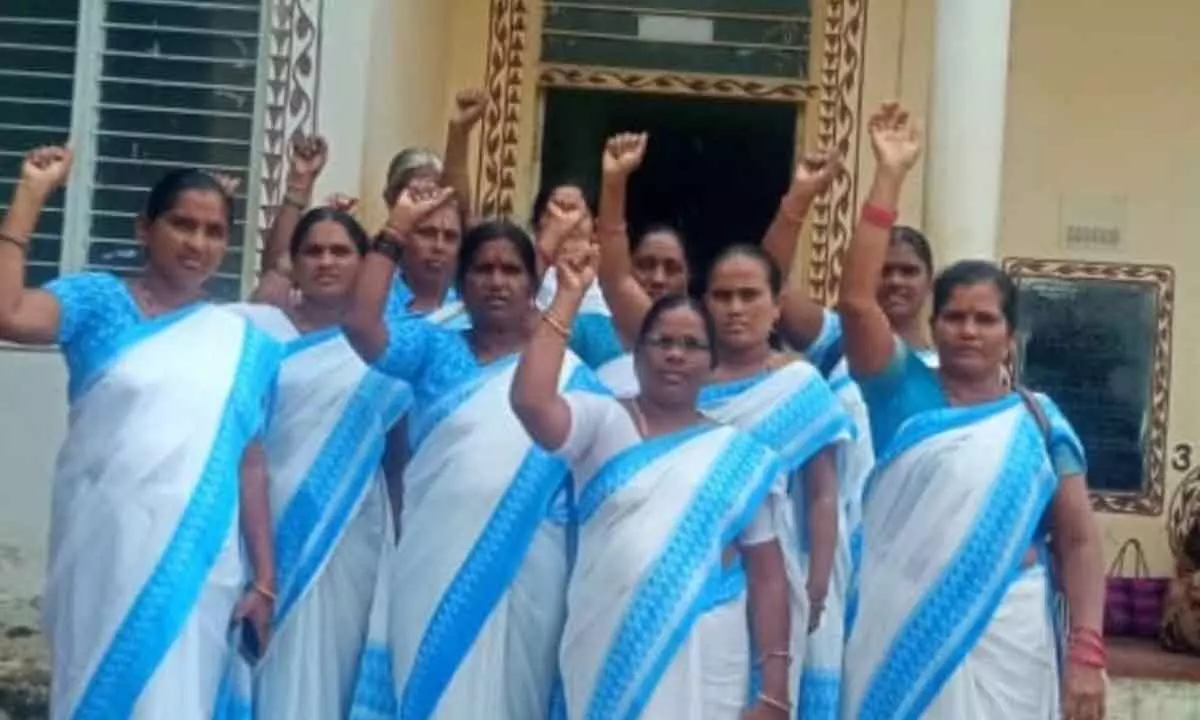
Gadwal: For over 15 years, Accredited Social Health Activists (ASHA workers) have been the backbone of rural healthcare in India. Yet, despite their crucial role in maternal health, child care, and community health services, their voices continue to echo with pain and frustration. Their long-standing demand for fair wages and reduced workload remains unanswered by successive governments.
From Limited Duties to Backbreaking Workload
Initially, ASHA workers were recruited to assist pregnant women—identifying them in villages and escorting them to hospitals for regular check-ups on Mondays and Wednesdays. On other days, these women could take up small household or wage labor work to support their families.
But with time, their workload multiplied. The previous governments steadily increased their responsibilities—tracking patients, guiding them to hospitals, educating villagers about diseases, and reporting community health data.
Unending Surveys and Added Burden
Today, ASHA workers are made to conduct endless surveys. Instead of focusing only on health, they are now pushed into tasks that traditionally belonged to municipal and panchayat staff. During the monsoon, they are told to identify unsafe houses, shift families to safer places, and conduct door-to-door health surveys.
Their survey duties include recording how many children and adults live in each household, identifying who suffers from chronic illnesses like cancer, TB, blood pressure, or diabetes, and keeping track of who is availing government health services. On top of that, they are asked to distribute medicines, assist delivery cases by staying overnight at hospitals, and provide midnight updates when officers demand reports.
For these women, there is no concept of a holiday. Even if they fall sick, they must depend on the mercy of their higher officials to take a break.
Crippling Socio-Economic Conditions
What was once a part-time engagement has now turned into a seven-day, thirty-day-a-month occupation—with no proportional rise in pay. Many ASHA workers belong to small families with no secondary source of income. Their meager wages are insufficient to cover household expenses, leaving them struggling to make ends meet.
The festival season, family celebrations, or even attending relatives’ weddings have become distant dreams for these women. Their income barely sustains food and basic needs, let alone savings for cultural or social functions.
Still, a faint hope keeps them going. “The wages are low, but at least the government is giving us something. Maybe someday, we will be given fair pay for our hard work,” many ASHA workers say.
A Plea to the Present Government
Now, their appeal is clear and urgent: “We request the present government to recognize our work, reduce our workload, and provide us with wages that match our efforts. For too long, we have been treated as bonded laborers. We deserve dignity, fair pay, and humane working conditions.”
Their struggle represents not only the plight of ASHA workers in Telangana but across the nation—a silent workforce that continues to serve despite hardship, hoping one day their voices will be heard.