Jogulamba Gadwal Secures 20th Rank in Inter II Year Results with 68.07% Pass Rate: Progress Made, Path Ahead Clear

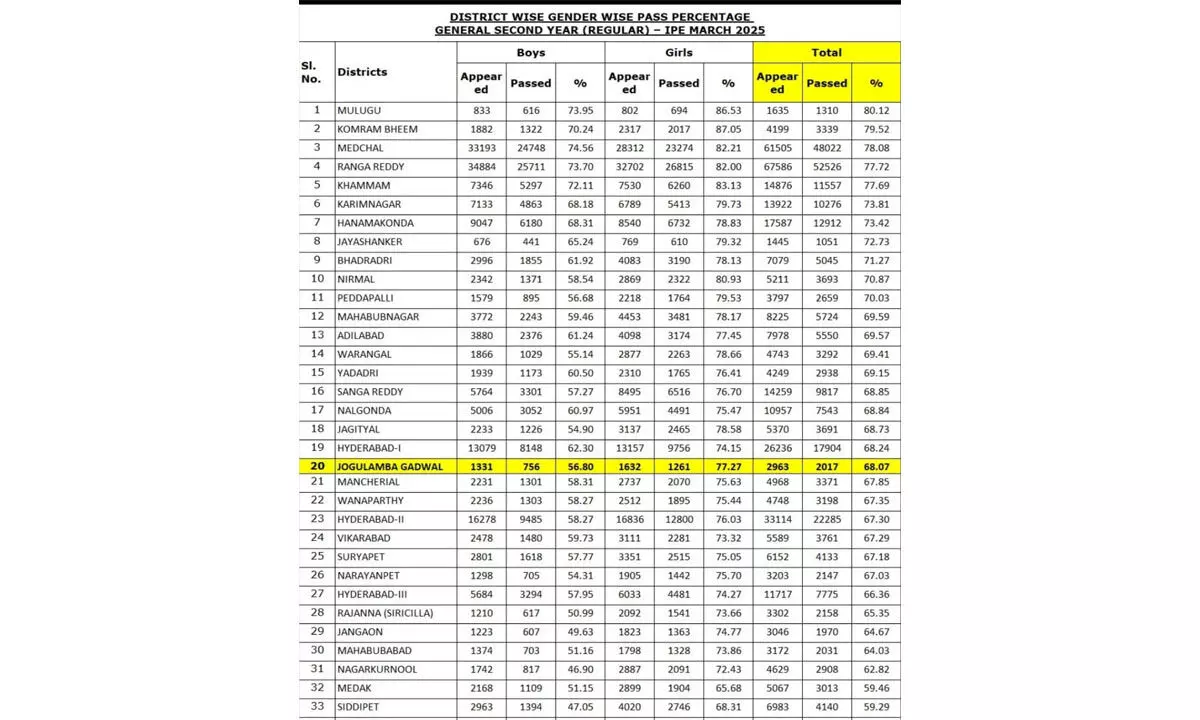
In a significant academic development, Jogulamba Gadwal district has secured the 20th position in the state in the Intermediate Second Year (2024-25) examinations, recording a pass percentage of 68.07%.
Gadwal: In a significant academic development, Jogulamba Gadwal district has secured the 20th position in the state in the Intermediate Second Year (2024-25) examinations, recording a pass percentage of 68.07%. The results, announced by the Telangana State Board of Intermediate Education, highlight both progress and persisting challenges in the district’s education landscape.
A Mixed Bag: Encouragement and Caution
While the 20th rank reflects moderate standing among the 33 districts, education stakeholders see it as a positive indicator of gradual improvement, particularly given the district’s struggles with rural dropouts, under-resourced colleges, and socio-economic barriers.
District Collector B.Y. Santosh expressed optimism, stating that the results are a result of sustained efforts from students, teachers, and administration. “We are working towards further improvements with targeted support for both students and faculty,” he added.
Government Institutions Showing Promise.
A key takeaway from this year’s results is the rising performance of government junior colleges, which were often seen lagging behind private institutions in past years. Thanks to initiatives like:
Free study material and question banks
Extended study hours and mock tests
Continuous monitoring by education officials
Students from even remote areas of the district have begun competing on more equal footing with their peers from private colleges.
Girls Continue to Outperform.
Preliminary data indicates that girl students have outperformed boys, echoing a trend across Telangana in recent years. Welfare schemes like Kalyana Lakshmi, scholarships, and residential facilities are being credited with boosting female attendance and academic focus.
Key Challenges Remain.
Despite the improvements, Jogulamba Gadwal continues to face educational roadblocks:
Seasonal dropouts during cotton harvesting months.
Lack of trained faculty and digital tools in remote colleges.
Inconsistent infrastructure in classrooms and laboratories.
Low awareness about career and competitive exam opportunities.
10-Point Strategy to Improve Future Results...
Experts and education officials have laid out a comprehensive improvement plan to lift the district into the top 10 ranks in coming years:
1. Bridge Courses: Strengthen core subjects at the beginning of the academic year through foundation classes.
2. Remedial Coaching: Special sessions for low scorers with individual mentoring.
3. Faculty Development: Regular training programs for teachers to adopt modern teaching techniques.
4. Digital Learning Support: Equip colleges with smart classes and encourage students to use learning apps.
5. Infrastructure Upgrades: Focus on clean drinking water, labs, libraries, and hygienic toilets.
6. Parental Involvement: Conduct regular PTMs and educate parents about student attendance and performance.
7. Career Guidance: Organize counseling sessions and motivate students through alumni success stories.
8. Continuous Evaluation: Monthly tests and academic tracking with feedback reports.
9. Dropout Prevention: Offer financial aid and mid-year counseling for at-risk students.
10. Motivation Drives: Celebrate achievements and publicly recognize high performers to inspire others.
Looking Forward...
With sincere implementation of these measures, Jogulamba Gadwal can expect to see better academic outcomes, reduced dropout rates, and a larger number of students moving toward professional careers. Education officials are already planning intensive “Back-to-School” campaigns and awareness programs in the lead-up to the next academic year.
In a district once considered academically backward, these results and plans indicate a turning tide—with hope, commitment, and community participation leading the way toward a brighter educational future.