As Vizag takes a big leap towards VER, it is going to become slum-free soon

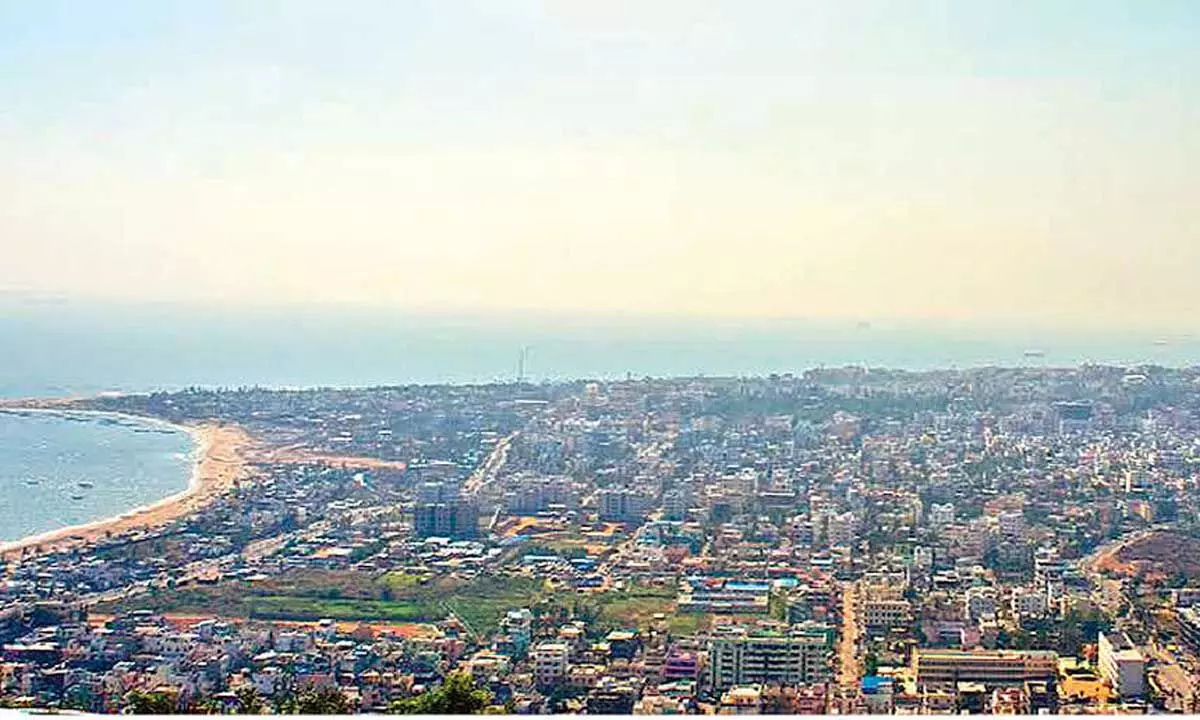
Visakhapatnam: Visakhapatnam is known for its long coastline, expanding IT corridors, and fast-growing industrial space. Yet, tucked between railway lines, hill slopes, industrial belts and newly-developed suburbs are the informal settlements that house scores of slum dwellers and their families. Given the fast-tracked industrial growth the city is witnessing in the recent past, the state government is making big plans to make the city slum-free.
Across the Greater Visakhapatnam Municipal Corporation (GVMC), over 700 such informal settlements form a part of the urban landscape. According to the latest civic survey, about five lakh people live in informal settlements.
The residents of these settlements are the city’s ‘unsung heroes’, construction workers who raise high-rise towers, sanitation workers who keep the streets clean, port labourers, domestic workers, auto-drivers, roadside vendors and fishermen.
In recent years, GVMC has intensified the exercise of slum-mapping, infrastructure upgrades and housing schemes under the PMAY-Urban and the Slum Free City Plan of Action. As part of it, roads are being built, drains covered, LED streetlights installed and digital surveys conducted to enhance infrastructure in slums.
Even as the Andhra Pradesh government is taking a big leap towards Visakhapatnam Economic Region (VER) targeting $125 billion revenue in the next decade, efforts are on to identify slum localities that fall under the GVMC jurisdiction, provide them with permanent housing to make Vizag slum-free. At a time when Visakhapatnam is on the verge of growing into a metropolitan hub, urban experts opine that making it slum-free gains larger significance.
As part of the Visakhapatnam Economic Region (VER), the state government has decided to develop Visakhapatnam as a slum-free city. In connection with it, slum areas that fall under the jurisdiction of the GVMC will be identified and provided with permanent housing. While the government plans to acquire such lands without any disputes, the slum dwellers will be relocated to improved neighbourhoods with enhanced facilities and better living standards.
According to GVMC figures, there were over 700 slums in Visakhapatnam as on 2023. However, with dozens of global IT and industrial giants keen on investing in Visakhapatnam, the government plans to transform the city into the most beautiful and conducive destination.
The VER, conceptualised jointly by the government of Andhra Pradesh and NITI Aayog, comprises nine districts, including Visakhapatnam, Anakapalli, Vizianagaram, Srikakulam, Kakinada, East Godavari, Dr BR Ambedkar Konaseema, Alluri Sitharama Raju and Parvathipuram Manyam. Spanning approximately 38,000 square kilometers and home to 16.5 million people, the region contributes nearly 30 percent of Andhra Pradesh’s gross state domestic product with a current GDP of USD 52 billion.
This transformation will be driven by seven strategic growth drivers, such as global port-proximate manufacturing, next-generation IT and data centres, agriculture and allied sectors, tourism, healthcare, planned urbanisation and sustainable infrastructure.
Chief Minister N Chandrababu Naidu directed concerned department officials to prepare a detailed plan of action and initiate implementation of VER on a priority basis. Ten departments were identified as nodal agencies for the execution of projects. Soon, the department officials will present a 90-day action plan.
The municipal administration and urban development department is responsible for seven projects focused on planned urbanisation and housing. They include the development of ‘Vizag Bay City’ and ‘Vizag 2.0’ as integrated mixed-use urban clusters, creation of 6,50,000-7,50,000 housing units, slum rehabilitation for 1,30,000 households, and transit-oriented development across 10-12 nodes.