How Untreated Varicose Veins Can Lead to Leg Ulcers, Clots, and Skin Damage

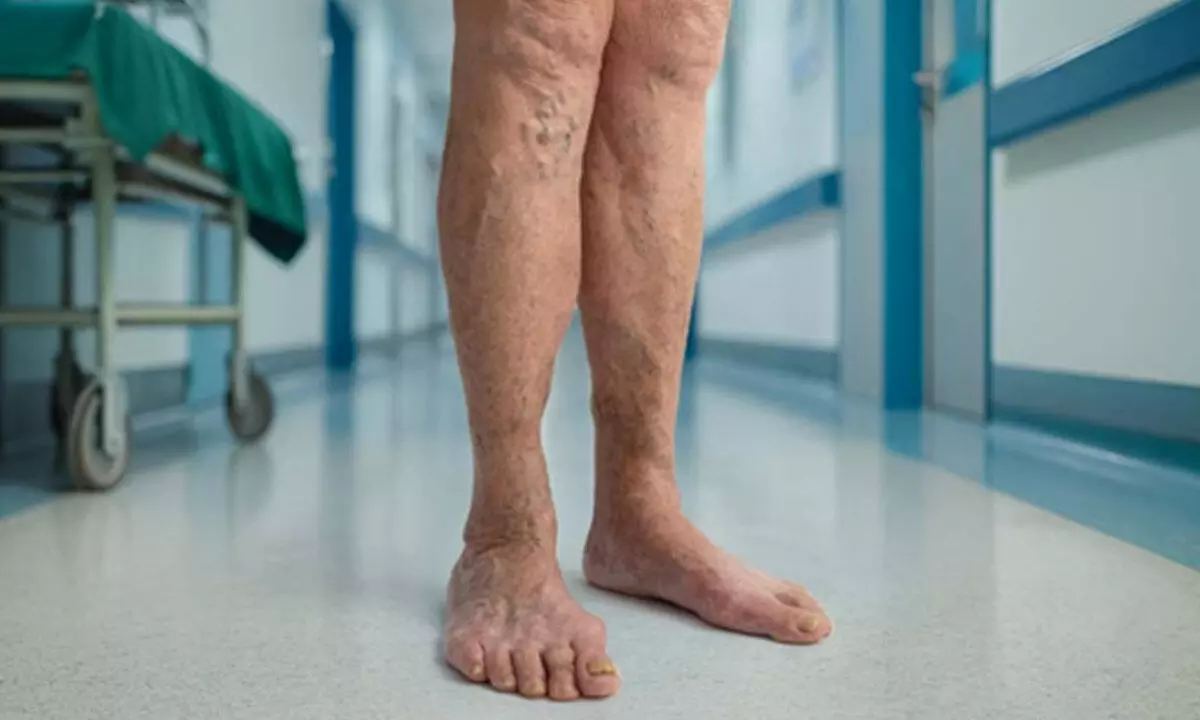
Understanding Varicose Veins
Varicose veins arise from a chronic circulatory disorder called chronic venous insufficiency (CVI). Leg veins return blood to the heart, working against gravity. They depend on one-way valves and the calf muscle pump to keep blood moving upward. When valves weaken, blood falls backward, causing venous reflux progression. This pooling creates sustained pressure inside leg veins, stretching vein walls until they become enlarged, twisted, and visible under the skin. Early symptoms often feel routine-tired, aching, itchy, or heavy legs, night cramps, burning sensations and ankle puffiness by evening. Because these early markers fade temporarily with rest, many overlook them. But valve dysfunction continues silently, worsening over time.
The Pressure Spiral: Why Complications Develop
Veins have thinner walls than arteries and are not built for long-term gravitational overload. When reflux persists, pressure rises and becomes inflammatory. Over months or years, blood stasis creates micro-injury inside the vessel, reduced oxygen exchange, and swelling in tissues around the vein. The system shifts from mild discomfort to a condition that affects the skin and tissue biology of the leg. Family history, smoking, hormonal influences, excess weight, or long upright hours at work speed this process, making complications appear earlier in some patients than others. The longer the pooling continues, the more the surrounding leg environment suffers.
Skin Damage: The First Visible Sign of Rising Pressure
When vein pressure begins altering the skin, CEAP Stage 4 of CVI is reached. The most common sign is varicose dermatitis, an eczema-like inflammation triggered by inflamed, stagnant blood return and lymphatic disruption. The skin may show brown or dark patches, dryness, itching, irritation, or burning sensitivity. Many mistake eczema, pigmentation, or itching as allergies. But in vein disease, dermatitis begins from the inside out, not from external irritants. If untreated, pigmentation deepens, skin becomes fragile, and immunity weakens locally. At this stage, even a small scratch or insect bite can refuse to heal quickly, because the tissue is already in a low-oxygen, inflammatory state.
Clots: When Stagnant Blood Turns Risky
As circulation slows, pooled blood becomes prone to clotting. This inflammatory condition is called superficial venous thrombophlebitis. Symptoms include a hard vein line that feels painful, warm, or tender to touch, sometimes with redness. Though these surface clots are not the same as deep vein thrombosis (DVT), they signal venous stasis and pressure overload. Recurrent clotting episodes demonstrate that the system is inflamed and needs medical reflux sealing to reduce the probability of repeated vein injury or oxygen compromise in deeper tissues.
Leg Ulcers: When Pressure Overpowers Healing
The most disruptive complication is venous leg ulceration (Stage 6 CEAP). These are chronic, painful, slow-healing wounds that typically form near the ankles or lower legs, where pressure is highest and circulation poorest. Venous ulcers do not develop from impact or injury-they develop from chronic internal vein pressure, tissue hypoxia, and inflammation. Because the wound site is in a persistently high-pressure, low-oxygen state, fibroblast repair slows, immunity drops, and infection risk increases. Even after a venous ulcer heals, the probability of recurrence remains high unless the refluxing vein network feeding the pressure zone is medically sealed.
Why Untreated Vein Disease Affects Mobility and Tissue
When vein valves fail progressively, circulation becomes inefficient. The affected vein stops participating in healthy return and shares its load with smaller branch networks and surrounding tissue. Pressure begins to leak inflammatory molecules, tissue oxygen exchange dips, and repair cells enter a slowed state. This is why ulcers and skin damage keep returning and why the tissue around ankles suffers the fastest. This pressure dominance changes the leg environment into one that resists healing despite good systemic health or nutrition.
Modern Minimally Invasive Vein Care
At Avis Vascular Centre, treatment targets the reflux source rather than only the visible outcome. Diagnosis is performed using a Venous Doppler ultrasound, which maps reflux, vein diameter, tributary networks, and pressure zones painlessly. Reflux points are sealed using Endovenous Laser Ablation (EVLA) or Radiofrequency Ablation (RFA)-thin fibre or catheter-based methods that close the faulty vein from the inside. Smaller veins are treated using ultrasound-guided foam sclerotherapy, where medicated foam collapses veins precisely without cuts. For visible branches, the advanced CLaCS technique uses cooling and laser precision for surface vein resolution. These are walk-in, walk-out procedures with rapid return to mobility. Once sealed, blood redirects into healthy veins, instantly unloading pressure, improving symptoms, protecting skin, preventing clot recurrence, and significantly reducing ulcer recurrence.
Final Takeaway
Varicose veins are not just visible lines- they are a sign of a system under chronic pressure. Once swelling, dermatitis, clots, or ulcers appear, clinical treatment is essential. The earlier the pressure and reflux are sealed, the better the tissue, mobility, appearance, comfort, and confidence are protected for the future.