NIPC – A revolutionary vision of N T Rama Rao


“A babe in politics,” said the irrepressible Andhra Pradesh Chief Minister Nandamuri Taraka Rama Rao (NTR) about himself, in an uncharacteristically self-deprecating mood. But this so-called “babe” went on to teach the country a few profound lessons about the slippery art of politics — one of which wasthe establishment of the National Institute of Political Consciousness (NIPC) in 1988.
At a time when politics was widely considered an arena for the opportunistic and the power hungry, NTR declared, “It is high time that we dispelled the delusion that politics is one profession that does not require any recognisable qualification for its practitioners.” True to this conviction, he founded the NIPC at Gandipet, near Hyderabad, to train aspiring leaders in political theory, practice, and above all, public service.
The nine-month residential program was designed with rigor. The day began at 4:45 a.m. with physical exercises, yoga, and meditation, followed by lectures on economics, public administration, sociology, Indian culture, the freedom movement, and governance.
Apart from classroom sessions, trainees engaged in self-study, field visits, and project reports. As one political scientist noted, “This is not run-of-the-mill university education; it’s a bold experiment to create a cadre of well-equipped politicians.”
The curriculum wasn’t only about theory. It emphasized practice — students were sent into villages to educate people on governance, welfare, and rights. As one trainee shared in the article, “The course will help us become broad-minded and then we can educate the villagers about many things.”
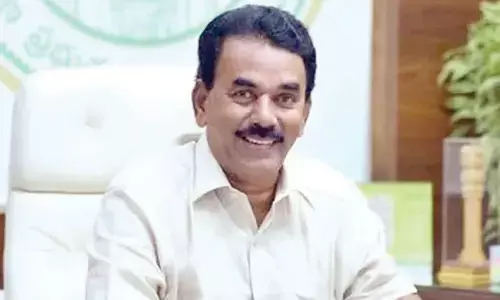
I was among the fortunate few — 52 out of over 300 applicants — who were selected for the first batch in August 1988. For me, NIPC was not merely an institute; it was a crucible that shaped my convictions, my sense of responsibility, and my political consciousness. Every morning run, every lecture on freedom struggles, every discussion on economic policy — all these instilled in us the discipline and vision that politics demands.
What I am today, I owe to the National Institute of Political Consciousness. It was NTR garu’s revolutionary foresight that ensured young people like me understood politics not as a career of convenience, but as a mission of service.
NTR was not just the founder of a regional party; he was a phenomenon who altered the course of Indian politics. With his Telugu Desam Party (TDP), he gave Andhra Pradesh its political self-respect and challenged the might of national parties. As a leader, he combined charisma with compassion, theatre with thought, and idealism with pragmatic governance.
His ideas were always ahead of his time. From advocating welfare schemes that touched the poorest of the poor, to envisioning trained and qualified politicians through the NIPC, NTR redefined what it meant to be a leader in a democracy.
Though short-lived, the NIPC was a path-breaking initiative. It stood as testimony to NTR’s belief that political leadership must be rooted in knowledge, discipline, and service. It was his answer to the dangers of leaving politics to “adventurers, opportunists and power mongers.”
For those of us who passed through its doors, NIPC remains a lifelong reminder that politics, at its best, is not about power but about purpose.
As NTR garu envisioned, the basic idea was clear:
“The country cannot afford to leave politics to adventurers, opportunists and power mongers. It must rest on trained minds and committed hearts.”
(The writer is OSD to former Union Civil Aviation Minister)