Preserving Sanatana Dharma: The duty of rulers

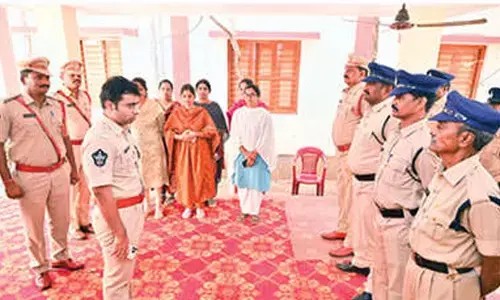
Political leaders must recognise that power is entrusted to them by the people. They should prioritise the well-being of citizens, formulate policies accordingly, and govern within constitutional limits
Hyderabad: The responsibility of any ruling party is to uphold the culture and traditions of the country. They have no authority to alter Sanatana Parampara, said His Holiness Anantashree Vibhushit, Dwarka Peethadheeshwar Jagadguru Shankaracharya Sri Sadanand Saraswati.
He emphasised that regardless of who comes to power, Sanatana Dharma must be followed. History proves that many non-dharmic rulers, including the British, governed India but eventually faded. Governance does not last where Dharma is sacrificed. Thus, political leaders must ensure development while adhering to Dharma.
"Just as a father’s conduct influences his children, the behavior of rulers impacts the people. Dharma flows from the top down, which is why Avatars descend from above to guide humanity. Lord Sri Ram, the personification of Dharma, exemplified the ideal life—honoring his parents, upholding brotherhood, and sacrificing personal comfort to fulfill his mother’s wishes. His life embodied the principles of 'Matru Devo Bhava, Pitru Devo Bhava, and Acharya Devo Bhava.'
Political leaders must recognise that power is entrusted to them by the people. They should prioritise the well-being of citizens, formulate policies accordingly, and govern within constitutional limits. Sanatana Dharma promotes 'Vasudhaiva Kutumbakam' (the world as one family) and 'Sarve Bhavantu Sukhinaha' (may all be happy). Hindus see divinity in every living being and even seek forgiveness for unintentionally harming an ant.
Swamiji highlighted that Hindu faith constantly reminds people to live a Dharmic life—rejecting Adharma and embracing Dharma. Among 8.4 million species, only humans can make this conscious choice. He illustrated this with a simple analogy: when given Kheer (sweet pudding) and poison, an intelligent person chooses Kheer, knowing poison is harmful. This awareness arises through Shastra and Guru, guiding people toward Dharma and progress.
Dharma can be practiced in small ways—protecting the environment and rivers, helping others, and offering water or Bilva leaves to Lord Mahadev. He suggested a practical example: if one spends Rs 1 crore on a wedding, an additional Rs 10 lakhs could be set aside to fund the marriages of ten underprivileged girls.
Wherever Dharma is abandoned, governance does not endure. Therefore, political leaders must balance development with Dharma to ensure a just and lasting rule.