OU engg team unveils solution to stave off sewarage hazards

By detecting methane, ammonia, and hydrogen sulphide, the IoT-based system helps prevent manual scavenging deaths
Hyderabad: Osmania University’s Civil Engineering department has developed an IoT-based sewage monitoring system that will help detect overflows and harmful gases in real time and prevent sewerage hazards.
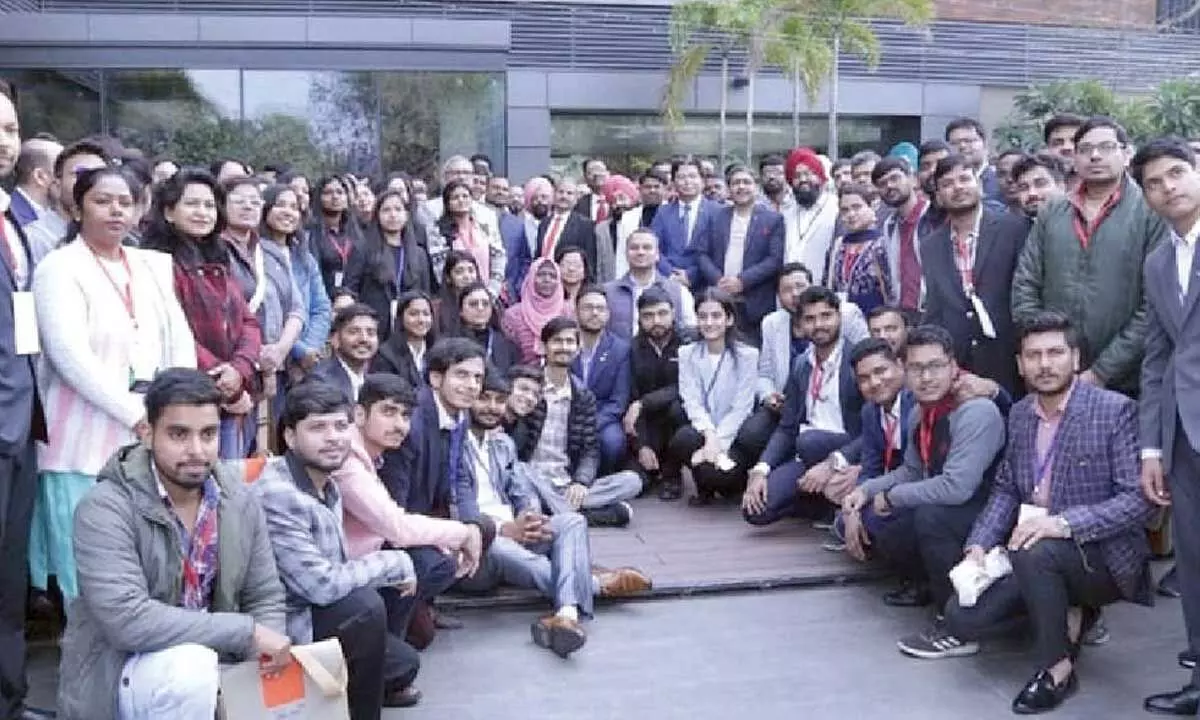
Students and faculty from Osmania University’s Civil Engineering Department, led by Prof K Shashikanth, have developed this monitoring system that detects overflows and harmful gases in real time and also ensures worker safety and efficient urban waste management. Recently, their research was presented at the prestigious ASCE International Conference on Sustainable Smart Cities (CISSC 2025) in Chandigarh.
Explaining about the system, Prof K Shashikanth said, “This is similar to an electronic device that can be placed whenever we want to know water depth, it is just placed beneath the sewer line.
It will not only measure the depth of water but also sends a message to concerned officials dealing with this issue. The system integrates advanced gas and water level sensors with IoT technology, instantly alerting authorities about toxic gas leaks and sewage blockages. By detecting methane, ammonia, and hydrogen sulphide, the technology prevents manual scavenging deaths, a recurring issue in cities like Hyderabad.
The collected data is transmitted wirelessly to a cloud platform for real-time monitoring and immediate intervention.
“We are in plans to take this system forward, and are in talks with the state government and GHMC.
Also, we have conducted a trial run at the OU campus, where students performed a test at one of the sewer lines and we received good results. With rapid urbanisation straining outdated sewerage infrastructure, this is cost-effective and scalable solution offers a game-changing approach to smart city waste management.
Osmania University’s innovation reinforces the critical role of technology in safeguarding public health and sanitation workers,” he added.