Understanding the Life and Literary Legacy of Sant Dnyaneshwar

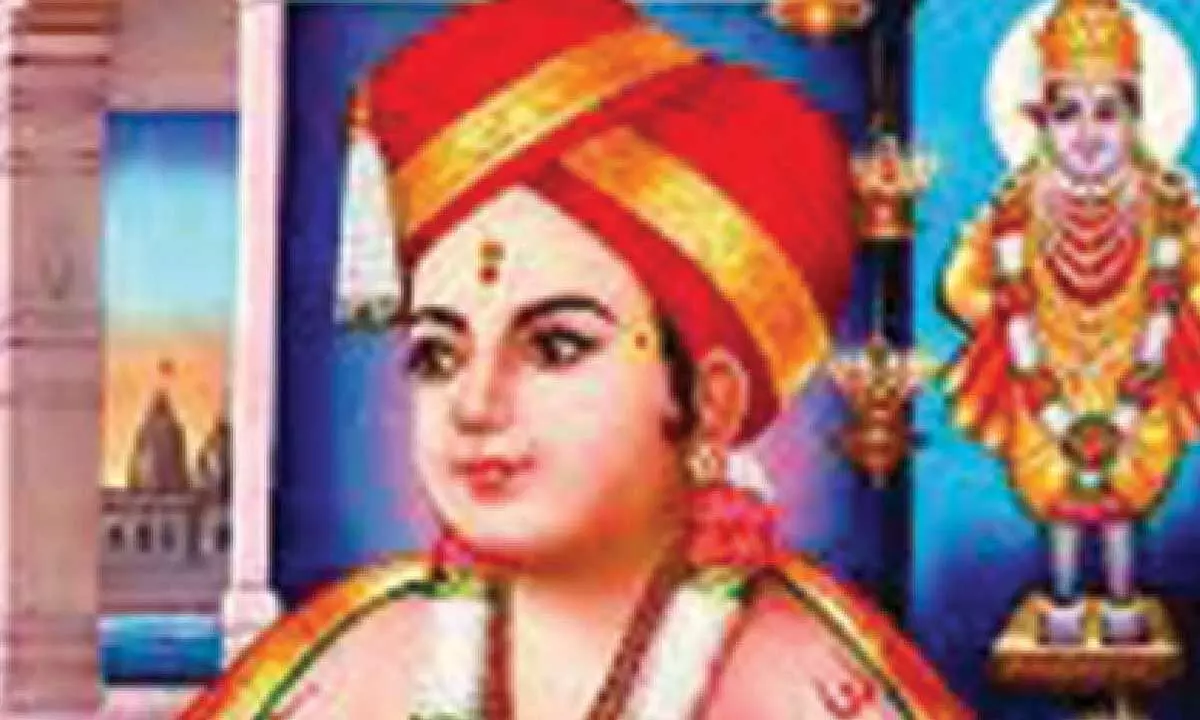
In an era where youth are shaped by technology, social media, and online trends, the life and work of Sant Dnyaneshwar offer profound lessons. His message transcends religious boundaries, speaking to the enduring human quest for meaning, resilience, compassion, and intellectual clarity. Far from being merely a medieval figure, historical events and narratives have confined him to spiritual texts, yet his relevance extends to modern life. Sant Dnyaneshwar exemplifies youthful brilliance, literary mastery, and transformative leadership. His writings, particularly the Dnyaneshwari, remain among the most influential works in Bharatiya philosophical literature, illuminating the path of inner growth while grounding individuals in ethical living. For today’s generation, navigating overstimulation, stress, and fragmented attention, his literary contributions offer a compass to recalibrate life, identity, and purpose.
Extraordinary Depth at an Extraordinary Age
Sant Dnyaneshwar’s life itself is a message for young people. Orphaned early, ostracised by orthodoxy, and burdened with responsibilities beyond his years, he demonstrated extraordinary spiritual resilience. By the age of 15, he composed commentaries and poetry of unparalleled depth; by 21, he completed a life of enlightenment and departed through sanjeevan samadhi at Alandi. What stands out is more than the brevity of his life—it’s the intensity of his inner development. In today’s world, where youth often struggle with self-doubt, comparison pressures, and social anxieties, Dnyaneshwar’s story shows how adversity can be transformed into awakening. He turned suffering into wisdom, exclusion into compassion, and intellectual inquiry into poetic expression. His life urges young minds to recognise the limitless potential within, irrespective of circumstances.
Dnyaneshwari: Knowledge Made Accessible
The Dnyaneshwari, his commentary on the Bhagavad Gita written in simple Marathi (then known as Prakrit Marathi), stands as his most enduring gift. In a time when sacred knowledge was restricted to Sanskrit-knowing elites, Dnyaneshwar democratised spiritual education, believing that wisdom is a universal right, not a privilege. This principle is deeply relevant today: information is abundant, but authentic understanding is rare. The present generation is inundated with data but often lacks frameworks for discernment. Dnyaneshwar’s writing teaches the importance of:
1. Clarity over complexity – True knowledge simplifies, uplifts, and empowers.
2. Dialogue over dogma – His commentary is conversational, grounding metaphysics in everyday life.
3. Purpose-driven learning – Knowledge should guide action, not inflate ego.
By rendering profound metaphysical truths through relatable metaphors—comparing the human mind to the fickle wind or spiritual discipline to taming a wild horse—he demonstrated that wisdom can be communicated simply yet powerfully.
Bhakti, Compassion, and Self-Realisation
Central to Dnyaneshwar’s work is the synthesis of bhakti (devotion) and jnana (knowledge). Unlike rigid intellectual traditions that prioritised logic alone, he insisted that spiritual evolution requires a fusion of intellect and emotion, reason and surrender. For young people today, who often experience emotional exhaustion while striving for academic or professional success, this is a transformative insight. Through the Dnyaneshwari, he advocates:
• Compassion as strength – Empathy is not weakness but transformative power.
• Self-realisation as the highest goal – Understanding one’s inner nature brings stability amidst chaos.
• Egolessness as freedom – The more one lets go of ego, the more one gains clarity.
This triad of values can serve as a foundation for mental well-being in an age plagued by identity crises and social pressures.
Metaphors of Nature for Mindfulness
Sant Dnyaneshwar’s writing is characterised by vivid imagery drawn from nature—fields, rivers, seasons, animals, and the rhythms of rural life. These metaphors are not ornamental; they function as meditative anchors. For example, he likens the state of meditation to a lamp kept in a windless place, steady and unwavering. He compares the divine presence to the fragrance in a flower—inseparable yet invisible. These images offer today’s youth a grounding practice in mindfulness. At a time when digital distraction dominates daily life, Dnyaneshwar’s metaphors train the mind to observe, reflect, and return to stillness.
Breaking Barriers and Encouraging Inclusivity
Another essential message from his life is his defiance of rigidity and social exclusion. At a time when societal hierarchies dictated access to knowledge, Sant Dnyaneshwar chose inclusivity. He spoke to farmers, women, children, and labourers in a language they understood. This inclusive vision aligns closely with the present generation’s emphasis on equality, accessibility, and social justice. He demonstrates that spiritual and intellectual leadership must always be rooted in humility, service, and universal upliftment.
Transformational Power of Words
Perhaps the most important lesson from Sant Dnyaneshwar’s legacy is the transformative potential of literature. His words were not mere commentary; they were instruments of awakening. Even centuries later, his writing continues to guide, heal, and inspire. Young people immersed in content-heavy digital ecosystems must rediscover the power of reflective reading. Sant Dnyaneshwar’s works encourage depth over speed, contemplation over consumption, and meaning over noise.
Sant Dnyaneshwar stands as a beacon for the present generation—a young philosopher-poet who proved that age does not limit insight, and adversity does not limit greatness. His life teaches resilience, while his literature teaches wisdom. His message is clear: personal growth must be rooted in inner clarity, universal love, and selfless service. In an era seeking balance between ambition and well-being, intellect and intuition, technology and tradition, Sant Dnyaneshwar’s legacy offers a timeless framework. For the modern generation, understanding him is not merely an academic exercise but an invitation to rediscover the essence of life itself.
(The writer is an Expert, Creative Economy)