Modi Emphasizes India's Economic Resilience During Tokyo Visit Amid Rising US Trade Tensions

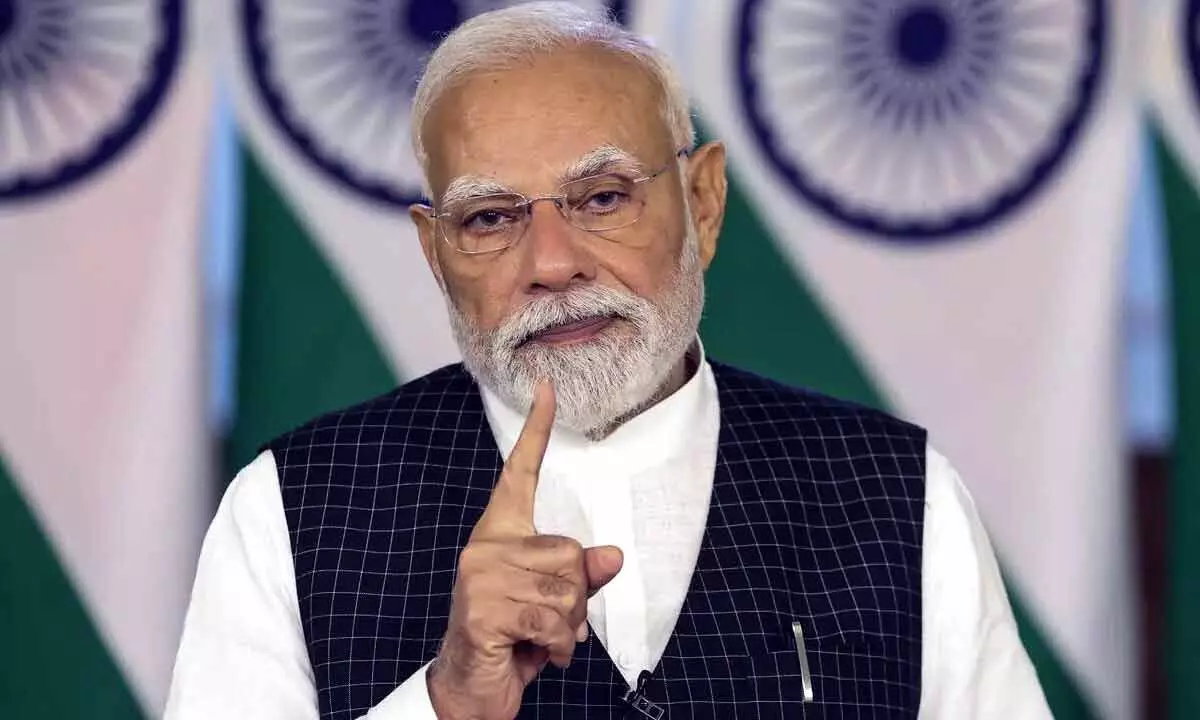
PM Modi highlights India's political stability and economic growth potential during Japan visit, positioning nation as future third-largest economy despite recent US tariff increases on Indian goods.
Prime Minister Narendra Modi reinforced India's position as a stable investment destination during his visit to Japan on Friday, emphasizing the nation's economic resilience and growth trajectory just days after the United States imposed severe tariff increases on Indian exports.
Speaking at the India-Japan Economic Forum in Tokyo, Modi highlighted India's robust fundamentals, stating that the country possesses political stability, economic consistency, policy transparency, and predictable governance frameworks. He projected confidence that India would soon achieve its goal of becoming the world's third-largest economy, currently maintaining its status as the fastest-growing major global economy.
The Prime Minister's remarks carry particular significance given the recent escalation in US-India trade tensions. Washington recently doubled tariffs on Indian goods to as high as 50 percent, citing concerns over India's continued purchases of Russian oil. This punitive rate matches those imposed on Brazil and represents the most severe trade restrictions among America's major trading partners, potentially impacting Indian economic growth and employment sectors.
Modi presented compelling statistics about India's economic performance, noting that the country contributes 18 percent to global GDP while consistently delivering strong market returns. He attributed this success to India's comprehensive approach of "reform, transform, and perform," which has driven sustained progress over the past eleven years. The Prime Minister emphasized that capital investments in India don't merely grow but multiply, creating exceptional opportunities for international partners.
Japanese business sentiment toward India remains overwhelmingly positive, with data from the Japan External Trade Organisation revealing that 80 percent of Japanese companies plan to expand their Indian operations. Additionally, 75 percent of these firms report profitable operations in the Indian market, demonstrating the tangible benefits of bilateral economic cooperation.
The India-Japan relationship has evolved into what Modi characterized as a "strategic and smart" partnership built on sound economic logic that transforms mutual interests into shared prosperity. Japanese companies have committed over $40 billion in total investments across India, with $13 billion in private investment occurring within just the past two years. This partnership spans diverse sectors including transportation infrastructure, manufacturing, semiconductor technology, and startup ecosystems.
Modi positioned India as Japan's gateway to the Global South, emphasizing their collaborative potential in shaping what he termed the "Asian Century" focused on stability, growth, and prosperity. The partnership extends from metropolitan transportation systems to advanced manufacturing capabilities, representing a comprehensive alliance built on trust and mutual benefit.
The Prime Minister highlighted several key policy initiatives driving India's business-friendly environment, including the implementation of the Goods and Services Tax system in 2017 and ongoing reforms to enhance ease of doing business. These measures include single-window approval processes for businesses, streamlining bureaucratic procedures and reducing operational complexity for international investors.
This marks Modi's first standalone visit to Japan in nearly seven years, undertaken at the invitation of Japanese Prime Minister Shigeru Ishiba. The two-day official visit centers around the 15th India-Japan Annual Summit, where both leaders will conduct comprehensive discussions reviewing bilateral progress across multiple domains while addressing regional and global issues of shared interest.
Following his Japan engagement, Modi's diplomatic schedule includes participation in the Shanghai Cooperation Organisation Summit in Tianjin, China, from August 31 to September 1, further demonstrating India's active engagement in regional multilateral frameworks despite ongoing geopolitical complexities.