Fresh Concerns Over Wakf Amendment Bill 2024; Demand for Withdrawal Intensifies

The proposed Wakf Amendment Bill 2024, which was initially referred to a Joint Parliamentary Committee (JPC) after strong opposition, has resurfaced in a revised form, sparking fresh concerns among Muslim organisations and political leaders.
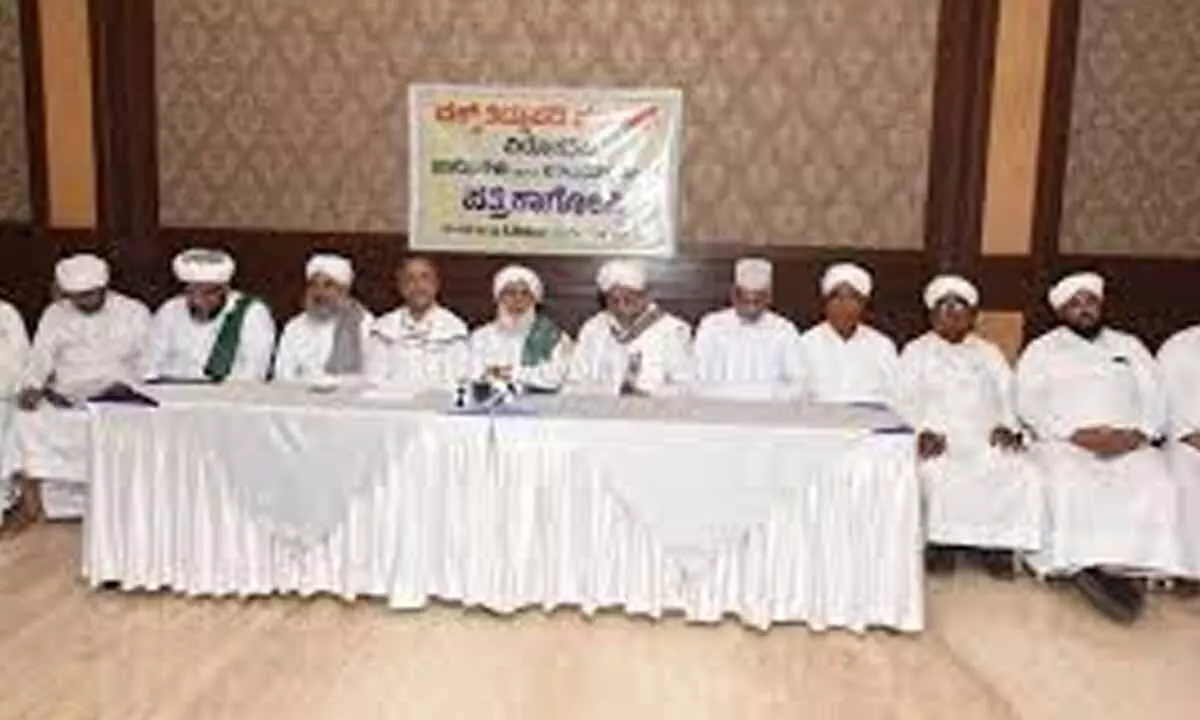
Mangaluru: The proposed Wakf Amendment Bill 2024, which was initially referred to a Joint Parliamentary Committee (JPC) after strong opposition, has resurfaced in a revised form, sparking fresh concerns among Muslim organisations and political leaders. Opponents argue that the Bill undermines the autonomy of Wakf institutions and could lead to large-scale dispossession of historical Wakf properties. Senior commmittee of various Muslim religious leaders and preachers of Mangaluru has called for a roll back of the bill
Addressing a press conference here today senior member of the committee, Khazi Ahmed Musliar Thaka Ustad stated that the Wakf system, which dates back centuries, involves properties donated for religious and social welfare purposes, which are protected under Islamic law. Critics argue that the new amendments weaken safeguards for these properties.
Listing the flaws in the proposed bill Ustad said that under the revised provisions, Wakf properties that lack official documentation must submit proof within six months to retain their status. Given that many Wakf endowments are based on oral agreements or historical records, this could result in significant dispossession. Previously, Wakf property surveys were conducted by independent experts with expertise in Islamic law. However, the new Bill assigns this responsibility to district magistrates, raising concerns over potential government interference. The mandatory requirement that Wakf Tribunal officials be Muslim has been removed, a move critics say is discriminatory since similar provisions exist for other religious institutions. Furthermore, the Bill mandates the inclusion of at least two non-Muslim members in Wakf Boards.
Opposition parties and Muslim organisations have condemned the Bill as an attempt to seize Wakf properties and erode religious freedoms. The JPC received nearly 98 lakh written objections, the majority opposing the amendments. Despite this, the government has proceeded with the revised version, disregarding objections raised by opposition members.
"The Bill not only threatens Wakf properties but also challenges the constitutional right to religious freedom," said a senior leader opposing the move.
Muslim leaders and activists have called upon citizens who value secularism and minority rights to oppose the amendments. They demand that the government withdraw the Bill immediately, citing its potential violation of constitutional guarantees.